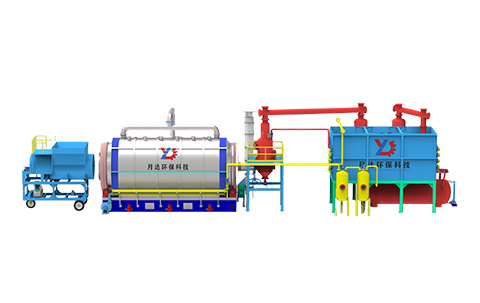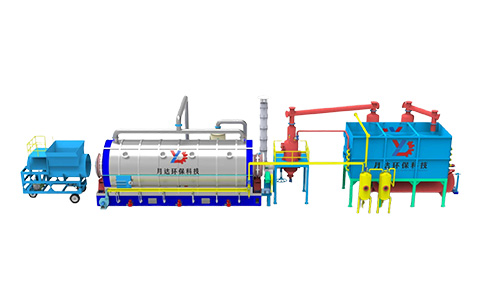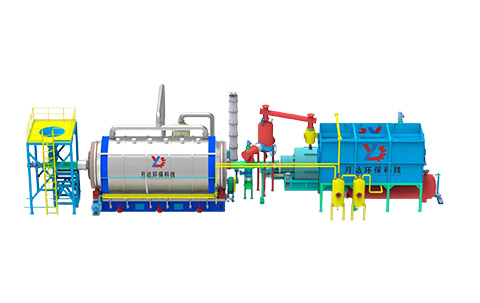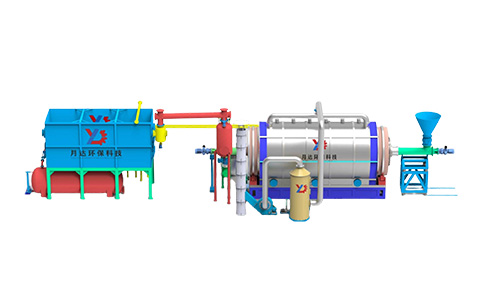
Waste Oil Distillation Plant
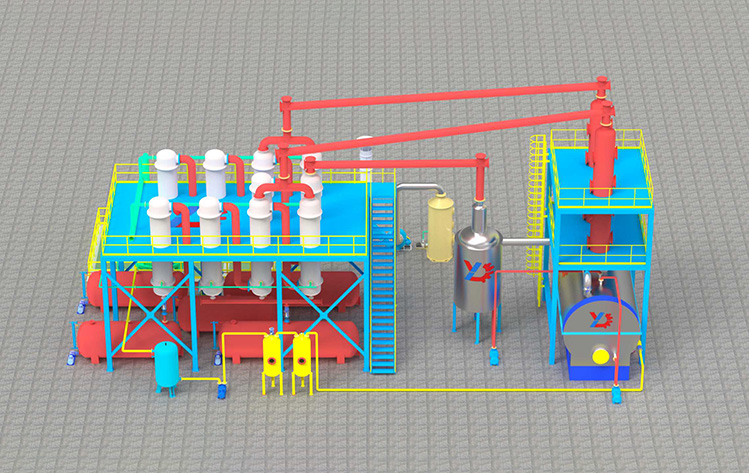
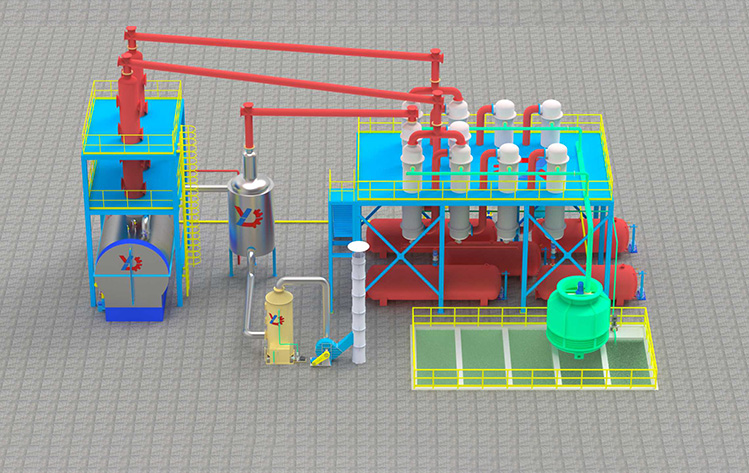
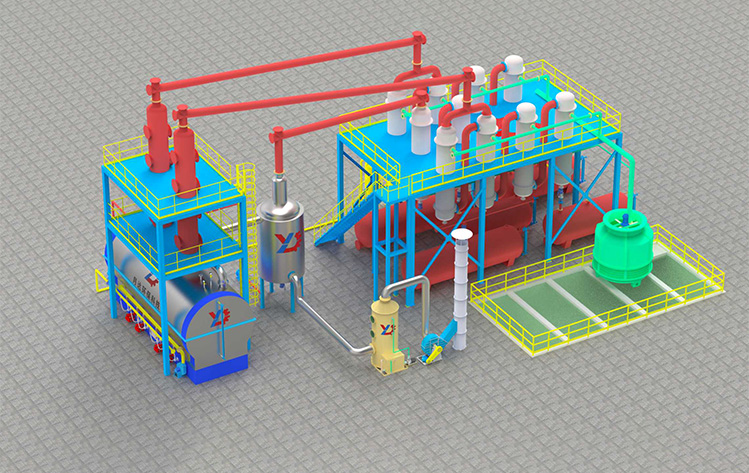
The latest waste oil distillation diesel refining equipment is an efficient, environmentally friendly and energy-saving waste oil treatment unit, which can convert waste oil into diesel fuel.
The latest waste oil distillation diesel refining equipment is an efficient, environmentally friendly and energy-saving waste oil treatment unit, which can convert waste oil into diesel fuel.
Adopting a new solid catalyst process, it abandons the traditional strong acid and alkali washing method. No manual acid-base proportioning is required, making operation safer, more environmentally friendly, time-saving and labor-efficient. After distillation and refining, the oil meets non-standard diesel standards without additional decolorization, realizing high-efficiency resource and energy utilization of waste engine oil.
Application Scope
Processable Raw Materials
Pyrolysis oil from waste tires, rubber and plastics; waste engine oil, waste lubricating oil, crude oil and other waste oil products.
Final Products
Non-standard diesel, asphalt and combustible gas.
The equipment features wide applicability and can process various industrial waste oils in batches according to raw material supply. It achieves multi-purpose use with excellent economic practicality.
Technological Process
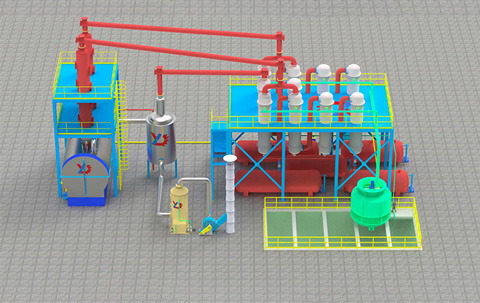
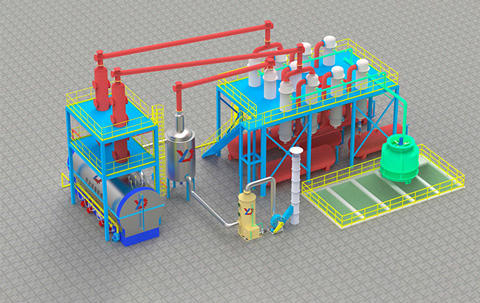
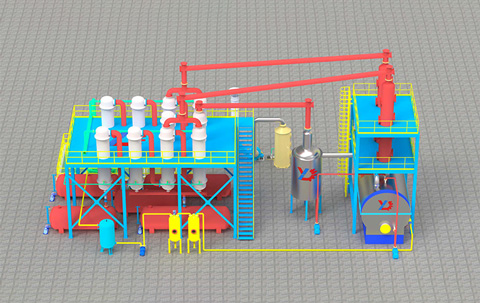
The complete workflow consists of five stages: preparation, distillation and impurity removal, decolorization and deodorization, asphalt discharge, and tail gas & flue gas purification.
-
Heat Conduction Oil Circulation Preparation
Start the thermal oil heater and pump heat conduction oil into the expansion tank. The oil fills the entire pipeline by gravity. Open valves in advance to fill the distillation reactor, catalytic tower and decolorization system for standby use.
-
Distillation & Impurity Removal
Turn on the burner to heat the distillation reactor together with the circulating thermal oil for rapid temperature rise and high-temperature distillation.Heat the thermal oil to 250℃ and maintain for one hour to evaporate moisture and emulsified components. The generated oil gas enters the horizontal condenser, liquefies and is stored temporarily in the first fraction tank.Continue heating until the reactor temperature reaches 380℃. The distilled oil gas is condensed and stored in the second fraction tank.Further heated oil gas flows into the catalytic tower. After catalytic reaction with Catalyst A and B, the refined light oil is collected into the third fraction tank.
-
Decolorization & Deodorization
Crude distilled oil has dark color and peculiar odor and requires secondary purification.Crude oil is pumped into the decolorization tank, with activated clay fed in for spiral stirring. Pigments and impurities are adsorbed by clay.The mixture is pumped into a blade filter to separate waste clay, then further fine-filtered via a bag filter to obtain clean, bright-colored non-standard diesel.
-
Asphalt Discharge
Open the slag discharge port. Residual asphalt inside the distillation reactor flows down naturally by gravity and is discharged from the bottom.
-
Tail Gas & Flue Gas Purification
Part of non-condensable combustible gas generated during high-temperature distillation is treated by water seal and desulfurization & deodorization tower, then recycled back to the reactor as heating fuel to reduce energy cost.Flue gas from distillation and gas combustion is purified by desulfurization tower spraying and discharged up to standard.
-
Performance Features
The equipment shows outstanding advantages in high efficiency, energy saving, environmental safety, simple operation, complete functionality and fast distillation speed.
-
High Efficiency & Energy Saving
Adopts high-efficiency catalytic distillation technology for full waste oil conversion, with diesel yield over 85%, greatly improving energy utilization and reducing consumption.
-
Environmental Protection & Safety
Fully enclosed catalytic distillation process ensures waste gas and residue are treated in compliance with environmental standards, guaranteeing safe and pollution-free production.
-
Simple Operation
Intelligent control system realizes automatic production, reducing manual intervention and labor intensity while boosting efficiency.
-
Multi-functional Application
Suitable for waste engine oil, waste lubricating oil, crude oil, heavy oil and other oil products to maximize resource utilization.
-
Vertical Distillation Reactor
Supports automatic high-temperature slag discharge for easy operation, residue removal and maintenance. Vertical layout occupies smaller floor area, saving land cost with better economy.
-
Dual Heating System
Combined heating by circulating heat medium and fuel enables continuous and efficient heating, saving fuel consumption and accelerating distillation speed.
|
Item |
Details |
|
Applicable Raw Materials |
Pyrolysis oil from tires, rubber and plastics; waste engine oil, waste lubricating oil and other waste oils |
|
Final Products |
Diesel, asphalt, combustible gas |
|
Models & Capacity |
YD-D-1:1 ton/dayYD-D-5:5 tons/dayYD-D-7:7 tons/dayYD-D-10:10 tons/dayYD-D-14:14 tons/day |
|
Machine Type |
Semi-continuous |
|
Slag Discharge Mode |
Vertical design, automatic high-temperature slag discharge |
|
Reactor Material |
Q345R / Q245R boiler plate + 304 / 316 stainless steel |
|
Plate Thickness |
14mm / 16mm / 18mm |
|
Heating Type |
Indirect heating; optional fast heating system |
|
Heating Fuel |
Fuel oil, gas, coal, wood, etc. |
|
Cooling Type |
Circulating water cooling |
|
Floor Area (10t model) |
200–300 ㎡Width: 10–15m; Length: 20–35m |
|
Labor Requirement |
2 workers per shift |
Profit Prospect of Waste Oil Regeneration Project
Normally, the diesel refining yield reaches 80%–83%, with 15%–20% asphalt by-product.Non-standard diesel can directly replace standard diesel for ships, tractors and heavy oil generators to cut fuel costs. Asphalt is widely used in road paving or further refining in asphalt plants. The project enjoys promising profit margins.
Profit Analysis — 10 Tons/Day Model
Daily Operating Cost
Waste oil: 10t × 4000 CNY = 40000 CNYFuel: 0.4t × 4000 CNY = 1600 CNYCatalyst: 30 CNY/t × 10t = 300 CNYPower: 40kW/h × 20h = 800 CNYWater: Recycled, nearly no consumptionLabor: 2 persons × 300 CNY = 600 CNYActivated clay: 1t × 800 CNY = 800 CNYTotal Daily Cost: 44100 CNY
Daily Revenue
Non-standard diesel: 8t × 6000 CNY = 48000 CNYAsphalt: 2t × 1100 CNY = 2200 CNYTotal Daily Revenue: 50200 CNY
Daily Profit
Daily Profit = Total Revenue − Total Cost= 50200 − 44100 = 6100 CNY
Waste engine oil can be distilled and cracked into 80%–85% non-standard diesel and 15%–20% asphalt (heavy oil impurities with similar properties to asphalt), fully releasing the economic value of waste oil.The equipment is equipped with professional dust removal and deodorization units to harmlessly treat harmful substances and eliminate secondary pollution during waste oil distillation.
Additional Equipment Features
1.Equipped with fast heating system; simultaneous heating by circulating medium and fuel accelerates distillation, realizes continuous high-efficiency operation, and saves fuel and operating costs.
2.Vertical distillation reactor enables automatic high-temperature slag discharge for easy operation and cleaning; smaller floor area reduces land investment. Indirect heating ensures uniform temperature distribution and longer service life.
3.Made of dedicated boiler plate; automatic welding and X-ray weld inspection ensure reliable quality, stable performance and steady operation.
4.Each reactor is fitted with temperature detectors and safety relief valves for safe and convenient operation.
5.Tail gas recycling system reuses waste gas for production, achieving environmental friendliness, energy saving and cost reduction.
|
Item |
Specification |
|
Raw Materials |
Tire / rubber / plastic pyrolysis oil, waste engine oil, waste lubricating oil |
|
End Products |
Diesel, asphalt, combustible gas |
|
Models & Capacity |
DY-D-1:1 ton/dayDY-D-5:5 tons/dayDY-D-7:7 tons/dayDY-D-10:10 tons/dayDY-D-14:14 tons/day |
|
Machine Type |
Semi-continuous |
|
Slag Discharge |
Vertical structure, automatic high-temperature slagging |
|
Reactor Material |
Q345R / Q245R boiler plate + 304 / 316 stainless steel |
|
Thickness |
14mm / 16mm / 18mm |
|
Heating Mode |
Indirect heating, optional fast heating system |
|
Available Fuel |
Fuel oil, natural gas, coal, biomass wood, etc. |
|
Cooling Mode |
Circulating water cooling |
|
Floor Area (10t model) |
200–300 ㎡ (W:10–15m, L:20–35m) |
|
Manpower |
2 workers per shift |